

- Title:
- 50 gems in the history of cinema
- Programme:
- Zinemateka
- Date:
- 09-01-2019 / 12-03-2020
- Place:
- Golem cinema, floor -2
- Curator(s):
- Corral, Rubén
- Produced by:
- Azkuna Zentroa - Alhóndiga Bilbao
- Type:
- Seasson
- Tags:
- Motion pictures - History
- Summary:
- Zinemateka organizes the programme 50 gems in the history of cinema. The best way to get to know the history of cinema is to enjoy some of the masterpieces that have helped to build the image that serves as the basis for much of the iconography of the twentieth century. The best way to learn about the history of cinema is to enjoy some of the masterpieces that have helped to build an image on which much of the iconography of the 20th century is based. It is therefore not surprising that there has been a proliferation of more or less organised lists of recommendations so that the general public can contextualise what they see today at home or in the cinema with the best of the past. Compared to other more successful criteria that have served to present the history of cinema throughout the last century (initially based on Hollywood film studios, but also on the auteur theory that emerged in France in the 1950s) in a resounding manner, based on the figure represented by the director or producer, for this Zinemateka programme we have chosen to recognise one of the most genuine qualities of cinematographic work: its plurality.
- Description:
-
First part of the cycle (January-April 2019) - With this programme, we begin 2019 at Zinemateka by offering a cross-sectional review of the best films in history, focusing on greats such as Federico Fellini, Jean-Luc Godard and Agnès Varda, but also on performers who have become emblems of their time - from Marilyn Monroe to Charles Chaplin, from Carole Lombard to Gene Kelly - and on one of the most essential tasks in cinema, that of the screenwriter.
- Federico Fellini. 8 ½-Otto e mezzo (1963)
- Agnes Varda. Cléo de 5 à 7 (1962)
- John Ford. My Darling Clementine (1948)
- Friedrich Wilhelm Murnau. Sunrise (1927)
- Jean-Luc Godard. À bout de souffle (1966)
- Larisa Shepitko. Voskhozhdenie (1977)
- Ida Lupino. The Hitch-Hiker (1953)
- Leni Riefenstahl. Triumph des Willens (1935)
- Howard Hawks. The big sleep (1946)
- Carol Reed. The thrid man (1950)
- Alain Resnais. Hiroshima mon amour (1959)
- Josef von Sternberg. Shangai Express (1932)
- Arthur Penn. The chase (1966)
- Jim Jarmusch. Down by law (1986)
- Luchino Visconti. Il gatopardo (1963)
- Michelangelo Antonioni. L'eclisse (1962)
- Charles Chaplin. Modern times (1936)
- John Huston. The misfits (1961) (1963)
- Ingmar Bergman. Smulltronstället (1957)
- Robert Bresson. Au hasard balthazar (1966)
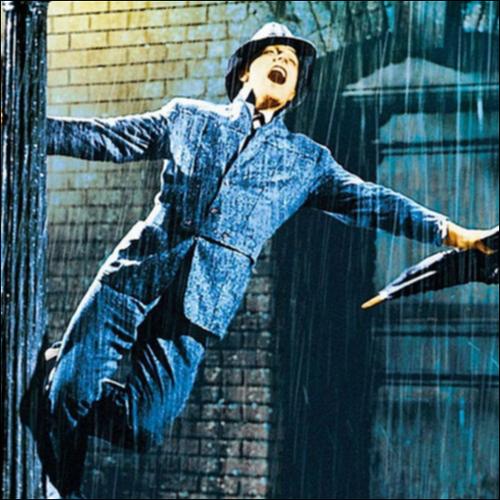
- Stanley Donen, Gene Kelly. Singin’ in the rain (1952)
- Billy Wilder. Sunset Boulevard (1950)
- Clyde Bruckman, Buster Keaton. The general (1926)
- Wim Wenders. Paris, Texas (1984)
- Ernst Lubitsch. To Be or Not to Be (1942)
- Robert Aldrich. What Ever Happened to Baby Jane? (1962)
- Max Ophüls. Letter from an Unknown Woman (1948)
- Alfred Hitchcock. Vertigo (1958)
- Ingmar Bergman. Persona (1966)
- Ernst Lubitsch. Ninotchka (1939)
- Michelangelo Antonioni. La notte (1961)
- Elia Kazan. Splendor in the Grass (1961)
- Roman Polanski. Rosemary's Baby (1968)
- Jean Renoir. La grande illusion (1937)
- Akira Kurosawa. Kumonosu-jô (Throne of Blood) (1957)
- Billy Wilder. Fedora (1978)
- Pier Paolo Pasolini. Mamma Roma (1962)
- Alain Resnais. L'année dernière à Marienbad (1961)
- George Cukor. My Fair Lady (1964)
- Kenji Mizoguchi. Yôkihi (1955)
- Jacques Demy. Les Demoiselles de Rochefort (1967)
- Carl Theodor Dreyer. Gertrud (1964)
- Stanley Kubrick. 2001: A Space Odyssey (1968)
- Howard Hawks. Gentlemen Prefer Blondes (1953)
- Steven Spielberg. E.T.: The Extra-Terrestrial (1982)
- Francis Ford Coppola. The Godfather (1972)
- Isao Takahata. Hotaru no Haka (1988)
- René Clément. Jeux interdits (1952)
- Yasujirō Ozu. Sanma no aji (1962)
- Federico Fellini. La dolce vita (1960)
- In Mediateka:
- Recommended bibliography
- Appears in Collections:
- Zinemateka
Documentation: